
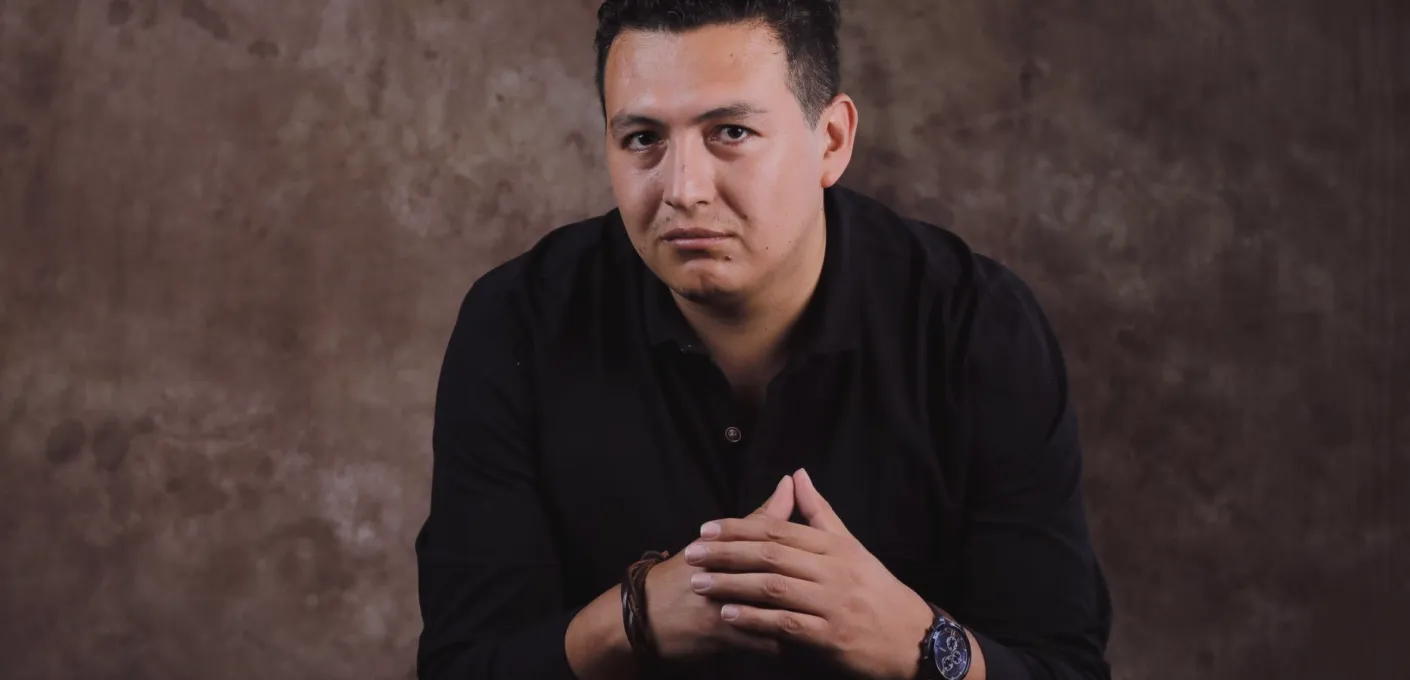
A Presenter, a Grey Wall and a Morning in the Studio
A short account of Marcus, a local author who booked a half day in our interview studio to record a presenter piece, and what we changed once the camera was running.
The enquiry
Marcus wrote to us in the first week of October. He had published a book on regional history and wanted a ten minute piece to camera, plus a short interview with a local historian, to sit on the website of the society that backed the project. He had never been in front of a lens for more than a minute or two, and said so plainly in his first message.
He asked whether a studio was really necessary. A quiet room at the society's offices was his alternative. I gave him an honest answer: a quiet room can work, but ceilings, windows and traffic noise usually decide the result more than the camera does. I suggested he come and see the studio on Elvet Waterside before committing, and he did that the following week.
The visit took half an hour. He sat in the chair, we switched on the key light, and he watched his own image on the monitor. That was enough for him to decide.
Planning the half day
We settled on a half day: a morning slot with one camera operator, a sound engineer and myself in the producer's seat. Marcus sent his notes in advance, around twelve hundred words of talking points rather than a script. I asked him to cut them to a page, because a presenter reading a long script looks like a presenter reading.
We agreed the running order in a short call. The piece to camera would come first, while he was fresh, followed by the interview with Alan, the historian, then a few spare minutes for cutaways of the book and his hands turning pages.
I also asked what he planned to wear. Plain mid-tone colours, no fine stripes, nothing glossy. He arrived in a dark green jumper, which suited the backdrop we had chosen.
- One page of talking points, not a full script
- Plain mid-tone clothing, no tight patterns
- A running order agreed before the day
The grey wall problem
The first test frame looked flat. We had put Marcus in front of a pale grey backdrop because it is the safe choice, and on camera it made his face and the wall almost the same value. Nothing was wrong technically, but nothing held the eye either.
Our director of photography moved the chair further from the wall to let it fall slightly out of focus, then added a low, warm accent lamp on the backdrop to give it some depth. A small hair light separated his shoulders from the background. None of this took more than ten minutes, but it changed the frame from a record of a man sitting down into something a viewer would keep watching.
Marcus looked at the monitor and said it was the first time he had looked like himself on screen. That is the reaction we hope for, and it comes from lighting, not from flattery.
Getting a natural delivery
Nerves showed in the first two takes. Marcus spoke fast and looked at the floor between sentences. We did not tell him to relax, because that never works. Instead, I sat just beside the lens, so that he spoke to a person rather than a glass circle, and I asked him to explain his book to me as if I had never heard of the subject.
By the third take his pace had settled. We let him make small mistakes and carry on, since a retake after every stumble drains the energy from a presenter piece. Where a sentence truly failed, we picked it up from the previous full stop.
The sound engineer kept a close lavalier on him and a second microphone out of frame as a safety. Clothing rustle was caught early, and a different jumper layer solved it before it reached the recording.
- Speak to a person beside the lens
- Carry on through small slips
- Check clothing noise before the first take
The interview with Alan
Alan arrived at eleven and had far more experience of being questioned than Marcus had of being filmed. We kept the same lighting but turned the second chair at a slight angle, so the two men faced each other rather than the camera, with the lens catching Alan in a three-quarter view.
Marcus asked six questions he had prepared and two he had not. The unprepared ones produced the best answers, which is usually the case. We recorded with two angles, one on Alan and one wider, so that the edit could cut between them without a jump.
The whole interview ran for about twenty minutes. We finished the morning with the cutaways, and the crew was packed away with the studio reset before one o'clock.
What he took away
Marcus left with the day's footage organised into folders by take, with our notes on which takes we thought worked best. He chose to do the edit with the society's volunteer, and sent us a link to the finished piece a fortnight later so that we could check the colour and levels.
The result was simple and clear: a man at ease, speaking about something he knew well, in a frame that looked considered. It was not a large production and did not need to be.
What I remember most is that the studio decision was small. A half day, one chair, a handful of lamps. The difference came from planning the morning properly and giving a nervous speaker room to find his own pace.
A studio hire for a presenter piece is rarely about equipment alone. Marcus came with a good subject and a worry about the camera, and what helped most was a short planning call, a lit space already built for the job, and a crew that let him settle. If you are weighing up a similar piece, send us your outline through the contact page and we will talk through what a morning could look like.